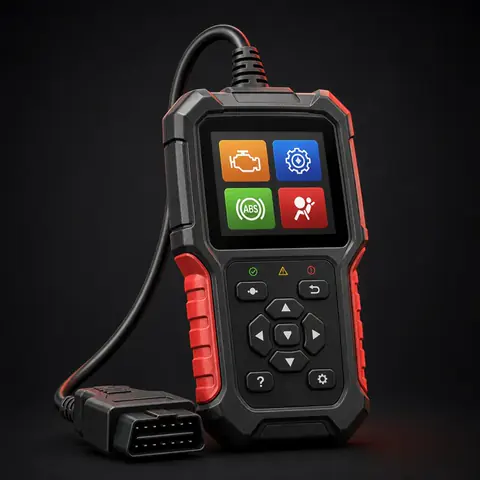
Pro · Four-system diagnostics
FOXWELL Multi-System Scanner
A handheld scanner aimed at engine, transmission, ABS, and airbag diagnostic work.
Chassis and ABS faults usually need a scanner that can read brake-system data directly.
View on Amazon
Easy one-page printout for the garage or repair shop
This summary uses the existing diagnostic information shown in full below.
This code means that the car's computer found a problem with the sensor that checks the temperature of the brake booster. It's like a thermometer for part of the brakes, and it's saying the temperature is too low.
The brake booster temperature sensor monitors the temperature of the brake booster. A low circuit signal indicates that the sensor is not sending the expected voltage to the vehicle's computer.
The C05B3 code is triggered when the Brake Booster Temperature Sensor C sends a signal to the Engine Control Module (ECM) that is below the predetermined threshold. This could be due to a fault in the sensor itself, wiring issues, or a problem with the ECM.
• Brake warning light on the dashboard
• Reduced braking performance
• Unusual brake pedal feel
• Faulty brake booster temperature sensor
• Damaged or corroded wiring or connectors
• Faulty ECM
Brake Booster: A device that uses vacuum pressure to help apply the brakes.
ECM: Engine Control Module, the computer that controls engine functions.
• Use an OBD-II scanner to verify the code.
• Inspect the brake booster temperature sensor for damage.
• Check the wiring and connectors for corrosion or damage.
• Test the voltage and resistance of the sensor.
• Replace the brake booster temperature sensor.
• Repair or replace damaged wiring or connectors.
• Reprogram or replace the ECM if necessary.
• OBD-II scanner
• Multimeter
• Basic hand tools
$150 - $400
Moderate
• Vehicle 1
• Vehicle 2
• Vehicle 3
• Regularly inspect brake system components.
• Ensure all electrical connections are secure.
• Perform routine maintenance checks.
Sensor Issue
• Do not ignore the brake warning light.
• Have the vehicle inspected by a professional if unsure.
Check with the vehicle manufacturer for specific warranty coverage on brake system components.
This code has been reported in vehicles with advanced braking systems that incorporate temperature sensors for monitoring purposes.
Moderate – Addressing this issue is important to ensure proper brake functionality.
Driving with compromised braking systems can be dangerous. Ensure repairs are made promptly to avoid safety risks.
• Vehicle engine running
• Brake system at operating temperature
The brake booster temperature sensor is typically located near the brake booster unit, which is usually found on the driver's side of the engine compartment.
Q: What happens if I ignore this code?
A: Ignoring this code can lead to reduced braking performance and potential safety hazards.
Q: Can I drive my car with this code?
A: While you may be able to drive, it's not recommended due to potential risks with brake performance.
Pro · Four-system diagnostics
A handheld scanner aimed at engine, transmission, ABS, and airbag diagnostic work.
Chassis and ABS faults usually need a scanner that can read brake-system data directly.
View on Amazon
Universal · Torque wrench
Useful when reassembly torque matters for wheel, suspension, and under-hood fasteners.
Useful when wheel, hub, or suspension hardware needs correct reassembly torque.
View on Amazon
Universal · Drive-on ramps
Helpful for safer access underneath the vehicle during exhaust, EVAP, and underbody inspection work.
Helpful for safer access during underbody inspection work.
View on AmazonThese are optional diagnostic tools, not guaranteed fixes. As an Amazon Associate I earn from qualifying purchases.