• Check Engine Light is on
• Reduced engine performance
• Poor acceleration
• Faulty turbocharger boost control position sensor B
• Wiring issues or poor electrical connections in the sensor circuit
• Faulty ECM
Turbocharger: A device that increases an engine's efficiency and power output by forcing extra air into the combustion chamber.
ECM: Engine Control Module, the computer responsible for managing engine functions.
• P2585
• P2587
Turbocharger Boost Control Position Sensor B Circuit
This code means there's a problem with a sensor in your car that helps control how much extra power the engine gets from the turbocharger. It's like a helper that tells the car how much to boost its speed, but it's not working right now.
The P2586 code indicates an issue with the circuit of the turbocharger boost control position sensor B. This sensor is responsible for monitoring the position of the turbocharger's boost control.
The turbocharger boost control position sensor B circuit is responsible for providing feedback to the engine control module (ECM) about the position of the turbocharger's boost control. When the ECM detects a malfunction in the sensor B circuit, it triggers the P2586 code.
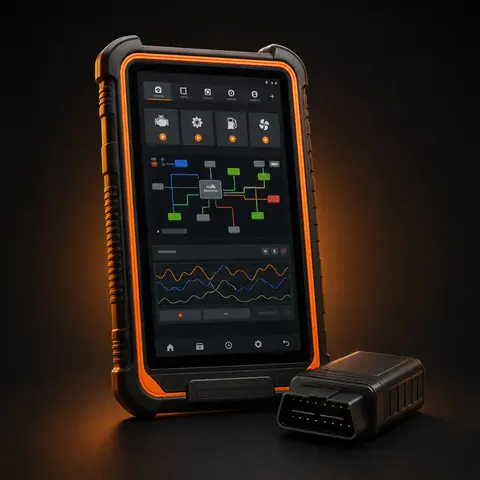
• Use an OBD-II scanner to confirm the code.
• Inspect the wiring and connections to the sensor for damage.
• Test the sensor for proper operation.
• Repair or replace damaged wiring or connectors.
• Replace the turbocharger boost control position sensor B.
• Reprogram or replace the ECM if necessary.
• OBD-II scanner
• Multimeter
• Basic hand tools
$150 - $400
Moderate
• Ford F-150
• Chevrolet Silverado
• Dodge Ram
• Regularly inspect and maintain turbocharger components.
• Ensure electrical connections are secure and free of corrosion.
• Follow recommended service intervals for turbocharged engines.
Sensor Issue
• Do not ignore the Check Engine Light.
• Have a professional mechanic inspect the vehicle if you're unsure.
• Avoid heavy acceleration until the issue is resolved.
Check with your vehicle's manufacturer for specific warranty coverage on turbocharger components.
The P2586 code has been associated with issues in turbocharged vehicles where sensor feedback is critical for performance.
Moderate – While the vehicle may still run, performance and fuel efficiency may be affected.
Driving with a malfunctioning turbocharger system can lead to further engine damage and reduced performance.
• Engine at normal operating temperature
• Vehicle running under load
The turbocharger boost control position sensor B is typically located near the turbocharger on the engine.
Q: Can I drive with a P2586 code?
A: It's possible to drive, but it's not recommended as it can lead to reduced performance and potential engine damage.
Q: How can I prevent this code from appearing?
A: Regular maintenance and inspections of the turbocharger system can help prevent this issue.