• Check Engine Light is on
• Reduced engine performance
• Increased fuel consumption
• Clogged diesel particulate filter
• Faulty exhaust pressure sensor
• Exhaust leaks
DPF: Diesel Particulate Filter
ECM: Engine Control Module
• P2003
• P244A
Particulate Filter Efficiency Below Threshold Bank 1
Your car has a special filter that helps clean the air coming out of the engine. This code means that the filter isn't working as well as it should on one side of the engine.
The diesel particulate filter (DPF) is not reducing emissions as expected, indicating a problem with its efficiency.
The P2002 code is triggered when the Engine Control Module (ECM) detects that the diesel particulate filter (DPF) on bank 1 is not operating efficiently. This can be due to excessive soot accumulation or a failure in the DPF system.
• Check for any exhaust leaks before the DPF.
• Inspect the DPF for excessive soot buildup.
• Test the exhaust pressure sensor for proper operation.
• Clean or replace the diesel particulate filter.
• Repair any exhaust leaks.
• Replace the faulty exhaust pressure sensor.
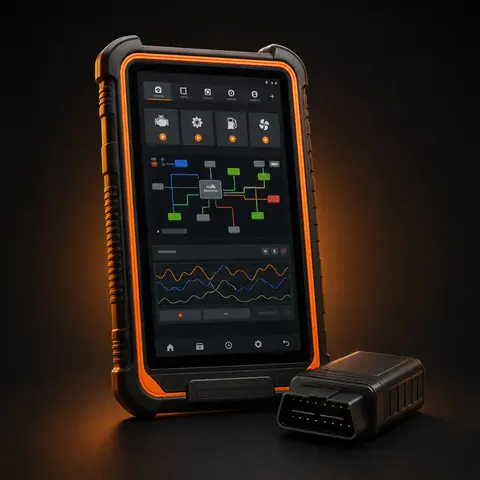
• OBD-II scanner
• Pressure gauge
• Basic hand tools
$500 - $2500
Moderate
• Ford F-250
• Chevrolet Silverado 2500
• Dodge Ram 2500
• Regularly drive at highway speeds to allow DPF regeneration.
• Use high-quality diesel fuel.
• Perform regular maintenance checks.
Emission Control System
• Avoid short trips that prevent the DPF from regenerating.
• Consider using a DPF cleaning additive.
Check with the manufacturer for specific warranty coverage on emission components.
This code became more prevalent with the introduction of stricter emissions regulations and the widespread use of DPFs in diesel vehicles.
Moderate – While the vehicle may still be drivable, prolonged driving with this issue can lead to more severe engine problems.
Driving with a faulty DPF can lead to increased emissions, which may not comply with environmental regulations.
• Engine at operating temperature
• Vehicle driven at various speeds
The diesel particulate filter is located in the exhaust system, typically near the engine or under the vehicle.
Q: Can I drive with a P2002 code?
A: It's possible to drive, but it's not recommended as it can lead to further engine issues and increased emissions.
Q: How often should the DPF be cleaned?
A: The DPF should be cleaned or regenerated as needed, typically every 100,000 miles, but this can vary based on driving habits.