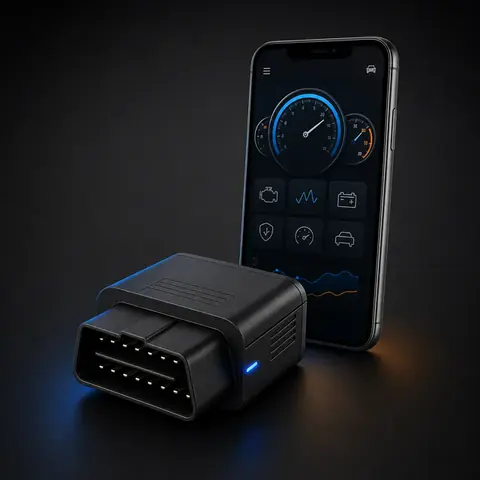
Budget · Bluetooth scanner
BlueDriver Pro Next
An app-based scanner with repair reports and enhanced system diagnostics on supported vehicles.
Helpful when live data and repair-report guidance can narrow down a drivability issue.
View on Amazon
Easy one-page printout for the garage or repair shop
This summary uses the existing diagnostic information shown in full below.
This code means that a sensor in your car that checks how much electricity is flowing to a part called the DC/DC converter isn't working right. It's like when a flashlight's battery is running low and the light gets dim.
The P1CD1 code is triggered when the vehicle's onboard computer detects a low voltage signal from the high voltage current sensor 'B' in the DC/DC converter circuit.
The DC/DC converter in hybrid and electric vehicles is responsible for converting high voltage from the battery pack to a lower voltage to power the vehicle's electrical systems. The current sensor 'B' monitors the current flow and ensures it is within the expected range. If the sensor detects a voltage lower than the predetermined threshold, the P1CD1 code is set.
• Check Engine Light is on
• Reduced fuel efficiency
• Possible electrical issues with vehicle systems
• Faulty high voltage current sensor 'B'
• Wiring issues such as open or short circuits
• Faulty DC/DC converter
DC/DC Converter: A device that converts high voltage from the battery to a lower voltage for the vehicle's electrical systems.
Current Sensor: A device that measures the flow of electrical current.
• Use an OBD-II scanner to confirm the code.
• Inspect the wiring and connectors for damage or corrosion.
• Test the high voltage current sensor 'B' for proper operation.
• Replace the high voltage current sensor 'B' if faulty.
• Repair or replace damaged wiring or connectors.
• Replace the DC/DC converter if necessary.
• OBD-II scanner
• Multimeter
• Basic hand tools
$200 - $600
Moderate
• Toyota Prius
• Chevrolet Volt
• Nissan Leaf
• Regular maintenance checks of electrical systems
• Ensure battery connections are clean and secure
• Avoid overloading the vehicle's electrical system
Sensor Issue
• Do not ignore the Check Engine Light.
• Have the vehicle inspected by a professional as soon as possible.
Check with your vehicle manufacturer for warranty coverage on hybrid/electric components.
This code is more common in hybrid and electric vehicles as they rely heavily on the DC/DC converter for electrical power management.
Moderate – While the vehicle may still operate, ignoring the issue could lead to more significant electrical problems.
Driving with a malfunctioning electrical system can lead to safety issues. It is recommended to address this problem promptly.
• Vehicle in 'ready' mode
• Ensure battery is fully charged
The high voltage current sensor 'B' is typically located near the DC/DC converter, often found in the engine compartment or under the vehicle.
Q: Can I drive my car with code P1CD1?
A: While you may be able to drive, it's not recommended as it can lead to further electrical issues.
Q: How do I reset the P1CD1 code?
A: Fix the underlying issue first, then use an OBD-II scanner to clear the code.
Budget · Bluetooth scanner
An app-based scanner with repair reports and enhanced system diagnostics on supported vehicles.
Helpful when live data and repair-report guidance can narrow down a drivability issue.
View on Amazon
Specialty · Fuel pressure tester
Helpful for no-start, lean, rich, injector, and fuel-delivery diagnosis.
Useful for checking whether fuel delivery is contributing to the fault.
View on Amazon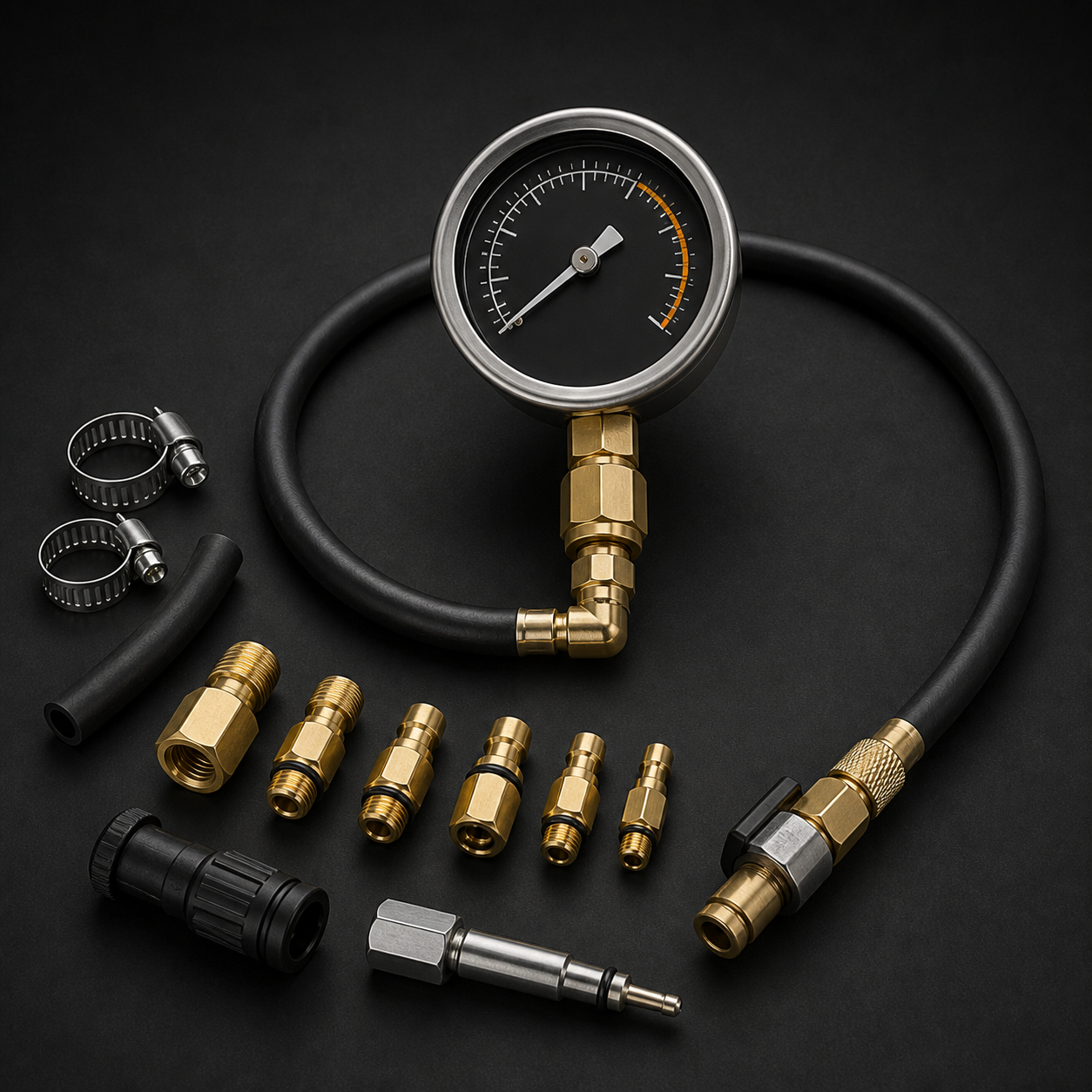
Specialty · Compression tester
Useful when misfire, mechanical condition, or low-cylinder-pressure problems are suspected.
Helpful when you need to rule out low compression or mechanical engine problems.
View on AmazonThese are optional diagnostic tools, not guaranteed fixes. As an Amazon Associate I earn from qualifying purchases.