• Check Engine Light illuminated
• Poor engine performance
• Increased fuel consumption
• Faulty knock sensor
• Damaged or corroded wiring or connectors
• ECM malfunction
Knock Sensor: A device that detects engine knocking or pinging.
ECM: Engine Control Module, the computer that manages engine functions.
• P033D
• P033E
This code means that the car's computer is getting a weak signal from a sensor that listens for knocking sounds in the engine. It's like when a microphone isn't picking up sound well.
The engine control module (ECM) is detecting a low voltage signal from the knock sensor circuit, which indicates a potential issue with the sensor or its wiring.
The knock sensor is responsible for detecting engine knocking or pinging, which can occur when fuel burns unevenly in the engine's cylinders. The P033C code is triggered when the ECM detects a voltage signal from the knock sensor that is lower than the expected range. This could be due to a faulty sensor, poor electrical connections, or damaged wiring.
• Perform a visual inspection of the knock sensor and related wiring.
• Use a multimeter to check the voltage and continuity of the knock sensor circuit.
• Test the knock sensor using an oscilloscope to verify its operation.
• Replace the knock sensor if it is found to be faulty.
• Repair or replace damaged wiring or connectors.
• Reprogram or replace the ECM if necessary.
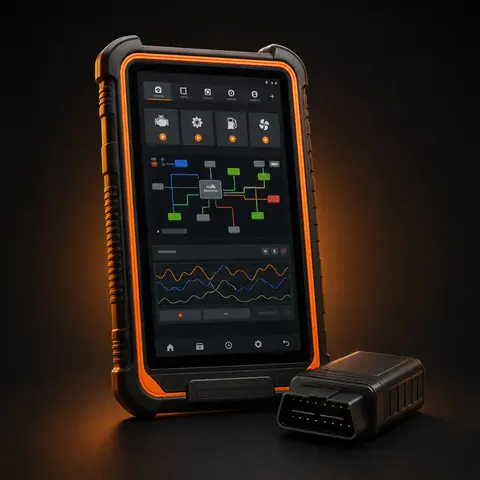
• OBD-II scanner
• Multimeter
• Oscilloscope
$100 - $400
Moderate
• Toyota Camry
• Honda Accord
• Ford F-150
• Regularly inspect and maintain engine sensors.
• Ensure proper engine tuning to prevent knocking.
• Use high-quality fuel to reduce engine knocking.
Sensor Issue
• Avoid driving at high speeds until the issue is resolved.
• Consult with a professional mechanic for a thorough diagnosis.
Check with your vehicle manufacturer to see if the knock sensor is covered under warranty.
This code has been associated with faulty knock sensors or wiring issues in various vehicle models over the years.
Moderate – Addressing this issue promptly can prevent further engine damage.
Driving with a malfunctioning knock sensor can lead to increased emissions and potential engine damage.
• Engine at operating temperature
• Vehicle at idle or under load
The knock sensor is typically located on the engine block, cylinder head, or intake manifold.
Q: Can I drive with a P033C code?
A: It's not recommended to drive for extended periods with this code, as it can lead to engine damage.
Q: How do I reset the P033C code?
A: You can reset the code using an OBD-II scanner, but it's important to fix the underlying issue first.