• Check Engine Light is on
• Reduced engine performance
• Unusual noises from the turbocharger
• Faulty turbocharger wastegate
• Defective turbocharger boost sensor
• Vacuum leak in the boost control system
Turbocharger: A device that increases an engine's efficiency and power output by forcing extra air into the combustion chamber.
Wastegate: A valve that controls the flow of exhaust gases to the turbocharger, regulating its speed.
• P0035
• P0045
Turbocharger/Supercharger A Turbine Overspeed
The turbocharger in your car is spinning too fast, like when a toy top spins too quickly and wobbles.
The engine control module (ECM) has detected that the turbocharger's turbine is spinning faster than it should, which can cause damage.
The P0049 code indicates that the turbocharger or supercharger turbine is operating at a speed exceeding the manufacturer's specified limit. This can be due to excessive boost pressure or a malfunction in the turbocharger control system.
• Use an OBD-II scanner to confirm the code.
• Inspect the turbocharger wastegate for proper operation.
• Check for vacuum leaks in the boost control system.
• Replace the faulty turbocharger wastegate.
• Repair or replace the turbocharger boost sensor.
• Fix any vacuum leaks found in the system.
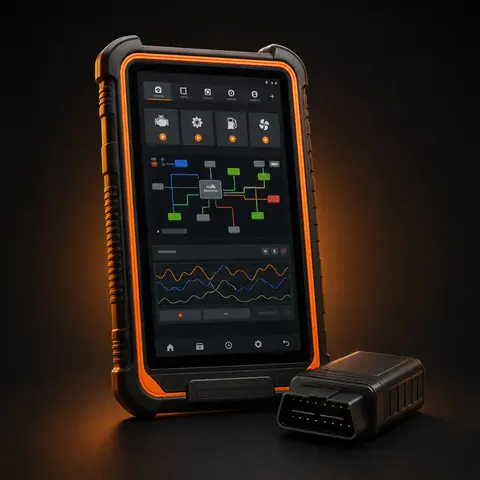
• OBD-II scanner
• Vacuum gauge
• Turbocharger boost pressure tester
$200 - $1500
Moderate
• Ford F-150
• Chevrolet Silverado
• Volkswagen Jetta
• Regular maintenance of the turbocharger system
• Ensure correct oil levels and quality
• Avoid aggressive driving habits
Engine Performance
• Avoid driving aggressively until the issue is fixed.
• Have the vehicle inspected by a professional mechanic.
Check with the vehicle manufacturer for specific warranty coverage related to the turbocharger.
The P0049 code has been noted in vehicles with turbochargers that experience high boost pressures or control system failures.
High – Continuing to drive with this issue can lead to severe engine damage.
Driving with a malfunctioning turbocharger can lead to reduced engine performance and potential safety hazards.
• Engine at normal operating temperature
• Vehicle driven under load
The turbocharger is typically located near the exhaust manifold, connected to the intake system of the engine.
Q: Can I drive my car with a P0049 code?
A: It's not recommended to drive with this code as it can lead to further engine damage.
Q: How serious is a P0049 code?
A: It's a serious issue that requires immediate attention to prevent engine damage.